IT Carbon Footprint Reduction
Reduce the carbon footprint of your website
A high-performing website is a lean website. Reduce the weight of your pages, the consumption of your servers, and the environmental impact of your online presence.
Carbon footprint
Impact per visit
-80%
CO₂
12 trees
Equiv. / year
A
EcoIndex
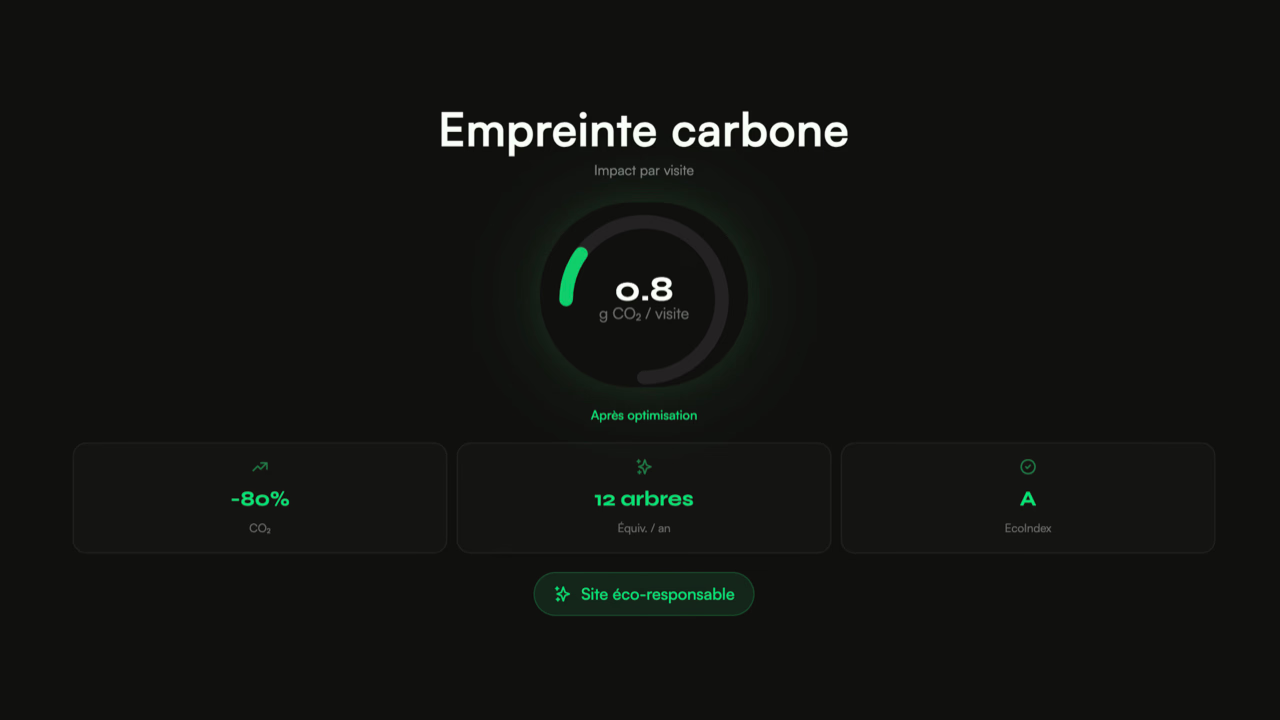
The impact of digital technology in numbers
Levers of digital sobriety
Performance and eco-responsibility go hand in hand. A lightweight site loads faster, consumes less energy, and provides a better user experience.
📏 Measurement and diagnosis
Analysis of your site's carbon footprint: page weight, number of requests, server consumption, and impact of third-party scripts.
🍃 Eco-design
Optimization of images, reduction of JavaScript, aggressive caching, and a sober architecture to drastically reduce the weight of each page.
🌍 Responsible hosting
Advice on choosing a host powered by renewable energy and optimizing infrastructure to reduce server consumption.
📜 Compliance and communication
Support towards the eco-design declaration (RGESN) and promoting your CSR approach to your clients and partners.
Visualize the impact of your site
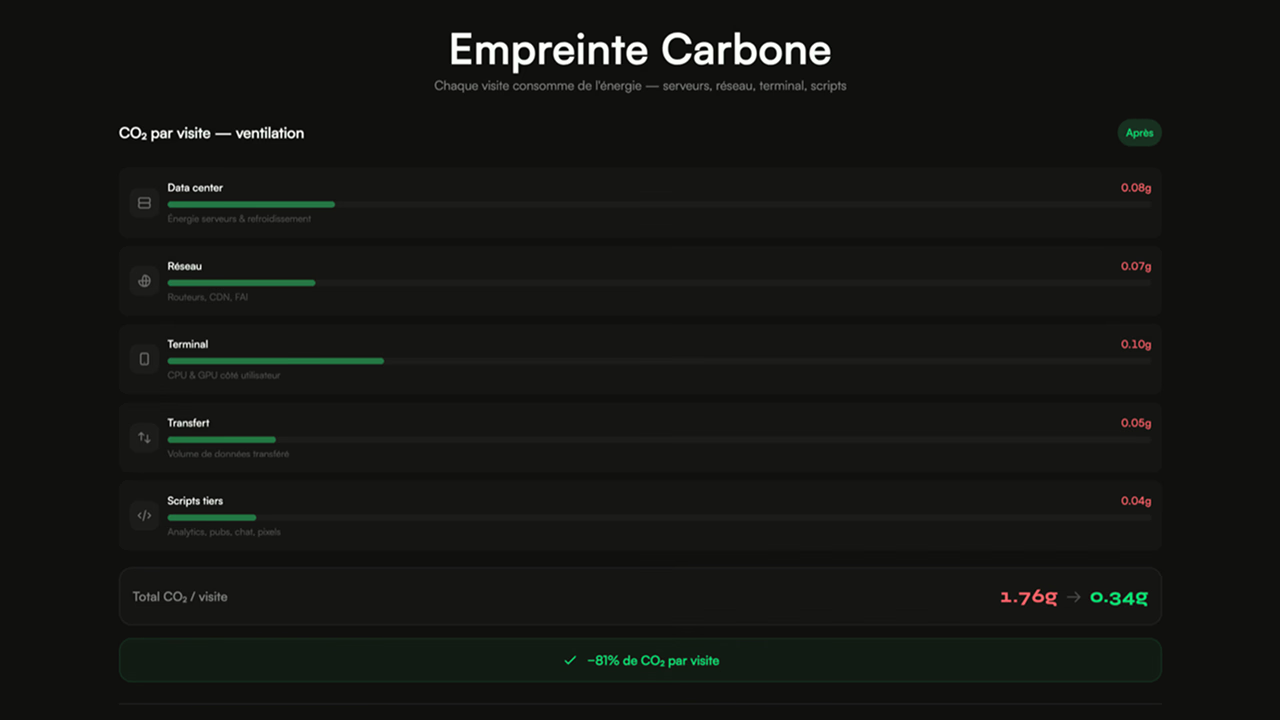
Carbon Footprint
Every visit consumes energy – servers, network, device, scripts
Server energy & cooling
Routers, CDN, ISP
User-side CPU & GPU
Data volume transferred
Analytics, ads, chat, pixels
Monthly CO₂
by car avoided / month
1 kg CO₂ ≈ 6 km
trees / year to offset
1 tree ≈ 22 kg CO₂ / year
Sources: Website Carbon Calculator · Sustainable Web Design
How to reduce your digital footprint?
A gradual and measurable approach
Sobriety plan
Identification of optimization levers ranked by environmental impact and technical feasibility.
Measurement of results
Before/after comparison of carbon footprint, page weight, and performance. Quantified report for your CSR communication.
Sobriety plan
Identification of optimization levers ranked by environmental impact and technical feasibility.
Measurement of results
Before/after comparison of carbon footprint, page weight, and performance. Quantified report for your CSR communication.
Measurable and verifiable results
Each optimization is measured with recognized tools (GreenIT Analysis, Website Carbon Calculator). You receive a quantified report of the reduction achieved, usable in your CSR communication.
What my clients say
Excellent work.
Paul has significantly improved the site's speed and perfectly aligned it with Google's recommendations.
Professional, thorough, and efficient, I highly recommend.
Nicolas - April Moto
Digital & E-commerce Director
We are very satisfied with Paul's work. He is quick, available, and particularly effective. Since his arrival, very good results have been observed, both in terms of performance and responsiveness. A real asset for our team.
Léo - Luxury brand
E-commerce Product Owner
I don't know if we've said it enough.
But if you want to improve your loading speed,
Make Google happy and get your Core Web Vitals in the green,
Contact Paul Delcloy.
Florian Darroman - Les Makers
Co-founder
Complementary services
Complete audit of your site's web performance: identification of bottlenecks, analysis of Core Web Vitals, and prioritized recommendations.
Support for optimizing the speed and user experience of your website, e-commerce, or corporate site.
Continuous monitoring of web performance: tracking Core Web Vitals, real-time alerts, and regression detection.
Frequently asked questions
What is the link between web performance and carbon footprint?
How do we measure a site's carbon footprint?
Does eco-design degrade the user experience?
What is RGESN?
Reduce your digital impact
Data 2023-2026
Responsible digital: why act now
Digital technology accounts for 3.7% of global CO₂ emissions, a figure that is constantly increasing. The average weight of web pages has doubled in five years, leading to higher energy consumption in data centers, networks, and user devices. Every loaded page consumes electricity at every link in the chain.
Reducing the carbon footprint of your site is not just an environmental gesture: it is also a competitive advantage. Consumers are increasingly sensitive to the ecological commitments of brands, and European regulations are pushing for more transparency regarding the environmental impact of digital services.
Performance and simplicity: two sides of the same coin
Optimizing web performance and reducing carbon footprint share the same levers. Compressing images, reducing JavaScript, caching resources, limiting server requests: each performance optimization is also an environmental optimization. A site that weighs 500 KB instead of 5 MB transfers ten times less data, which directly translates to reduced energy consumption.
This convergence is an opportunity: by working on performance, you simultaneously improve user experience, SEO, and your carbon footprint. There’s no need to sacrifice one for the other.
Measure to progress
You can only improve what you measure. A carbon audit of a website evaluates page weight, the number of requests, server consumption, cache efficiency, and the impact of third-party scripts. This data allows you to target high-impact optimizations and quantify the results achieved. Reference tools like GreenIT Analysis, Website Carbon Calculator, and EcoIndex provide comparable and recognized metrics.
Eco-design in service of the user
Digital eco-design does not mean creating austere and stripped-down sites. It encourages questioning every element: is this autoplay video necessary? Is this 20-slide carousel being viewed? Does this third-party marketing script really add value? By eliminating the superfluous, you achieve a faster, more accessible, easier-to-maintain site — and one that consumes less energy. Ultimately, eco-design is a design discipline that benefits everyone.