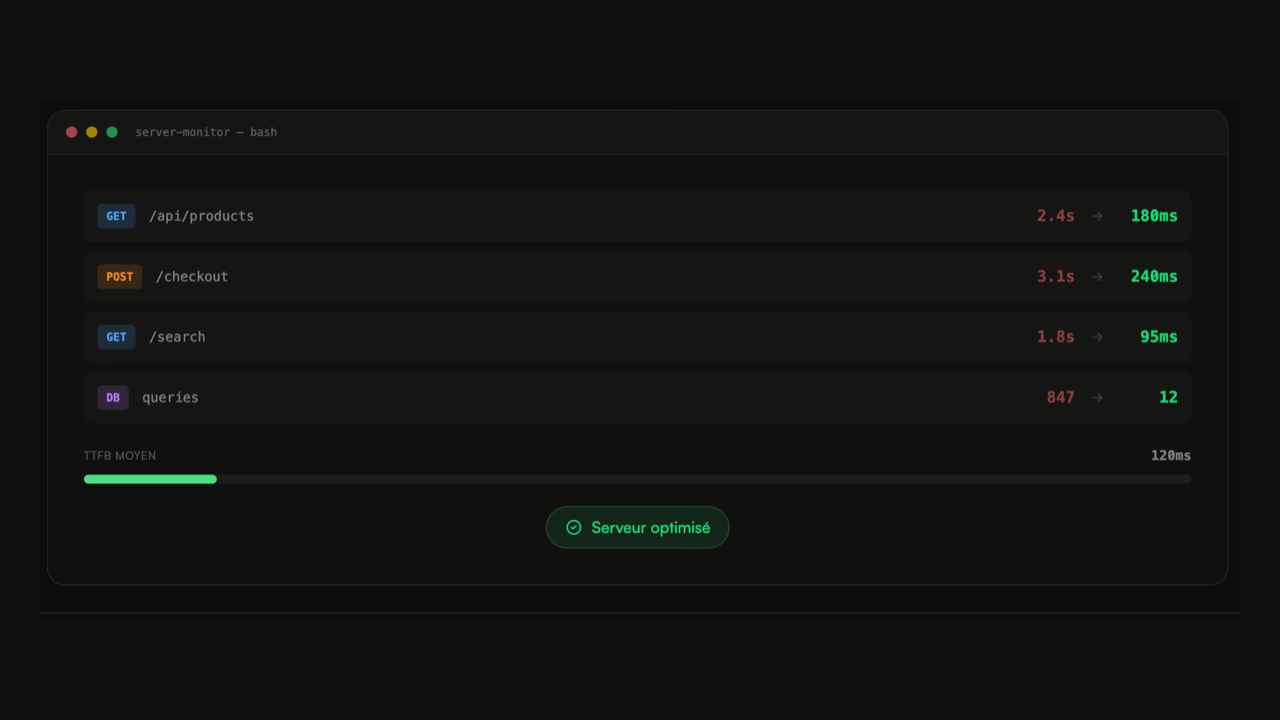
ORM N+1, unindexed queries, blocking synchronous jobs. I optimize Laravel, Symfony, Django and infrastructure to bring server response time down for the long run.
100% satisfied clients Data 2023-2026
•8+ years XP•35+ clients partnered
Backend sets the performance ceiling. As long as it's not addressed, frontend optimizations have limited effect.
⏱️ TTFB above 600ms on strategic pages
PageSpeed flags a red TTFB without giving the cause. APM traces immediately surface the slow SQL query, the blocking third-party service, the costly deserialization.
🔁 N+1 queries nobody sees
ORM makes joins invisible. A page looping on 50 entities and accessing relations without with() triggers 51 queries. Telescope, Symfony Profiler, django-silk expose the pattern immediately.
📊 Non-indexed SQL queries on hot tables
EXPLAIN on slow queries identifies full scans. Adding indexes adapted to the access pattern drops query time 10x to 100x.
🔌 Third-party calls blocking rendering
Synchronous authentication, fraud scoring, marketing webhooks, remote cache. APM Service Map makes them visible. We desync, we cache, we move.
💾 No object cache, no Redis
DB sessions, options re-queried every page, uncached fragments. Redis for cache and sessions drops TTFB without touching application code.
⚙️ PHP 7.x or Python 3.10, opcache disabled
PHP 8.x + opcache + JIT divides execution time by 2 to 4. Python 3.11+ brings significant interpreter gains. Runtime upgrade is the most cost-effective stack gain.
The backend stacks I optimize
Laravel (Eloquent, opcache, Octane), Symfony (Doctrine, HTTP cache, FrankenPHP), Python (Django ORM, async, gunicorn). With Datadog or Dynatrace instrumentation based on what's in place.
Angular
Astro
Drupal
Laravel
Python
React
Salesforce Commerce Cloud
SAP Commerce Cloud
Sylius
Symfony
Akamai mPulse
Datadog
Dynatrace
SpeedCurve
Akamai
Cloudflare
Fastly
Magento
Prestashop
Shopify
Wordpress
Medusa.js
Ruby on Rails
Angular
Astro
Drupal
Laravel
Python
React
Salesforce Commerce Cloud
SAP Commerce Cloud
Sylius
Symfony
Akamai mPulse
Datadog
Dynatrace
SpeedCurve
Akamai
Cloudflare
Fastly
Magento
Prestashop
Shopify
Wordpress
Medusa.js
Ruby on Rails
Angular
Astro
Drupal
Laravel
Python
React
Salesforce Commerce Cloud
SAP Commerce Cloud
Sylius
Symfony
Akamai mPulse
Datadog
Dynatrace
SpeedCurve
Akamai
Cloudflare
Fastly
Magento
Prestashop
Shopify
Wordpress
Medusa.js
Ruby on Rails
AngularAstroDrupalLaravelPythonReactSalesforce Commerce CloudSAP Commerce CloudSyliusSymfonyAkamai mPulseDatadogDynatraceSpeedCurveAkamaiCloudflareFastlyMagentoPrestashopShopifyWordpressMedusa.jsRuby on RailsAngularAstroDrupalLaravelPythonReactSalesforce Commerce CloudSAP Commerce CloudSyliusSymfonyAkamai mPulseDatadogDynatraceSpeedCurveAkamaiCloudflareFastlyMagentoPrestashopShopifyWordpressMedusa.jsRuby on RailsAngularAstroDrupalLaravelPythonReactSalesforce Commerce CloudSAP Commerce CloudSyliusSymfonyAkamai mPulseDatadogDynatraceSpeedCurveAkamaiCloudflareFastlyMagentoPrestashopShopifyWordpressMedusa.jsRuby on RailsAngularAstroDrupalLaravelPythonReactSalesforce Commerce CloudSAP Commerce CloudSyliusSymfonyAkamai mPulseDatadogDynatraceSpeedCurveAkamaiCloudflareFastlyMagentoPrestashopShopifyWordpressMedusa.jsRuby on RailsAngularAstroDrupalLaravelPythonReactSalesforce Commerce CloudSAP Commerce CloudSyliusSymfonyAkamai mPulseDatadogDynatraceSpeedCurveAkamaiCloudflareFastlyMagentoPrestashopShopifyWordpressMedusa.jsRuby on RailsAngularAstroDrupalLaravelPythonReactSalesforce Commerce CloudSAP Commerce CloudSyliusSymfonyAkamai mPulseDatadogDynatraceSpeedCurveAkamaiCloudflareFastlyMagentoPrestashopShopifyWordpressMedusa.jsRuby on RailsAngularAstroDrupalLaravelPythonReactSalesforce Commerce CloudSAP Commerce CloudSyliusSymfonyAkamai mPulseDatadogDynatraceSpeedCurveAkamaiCloudflareFastlyMagentoPrestashopShopifyWordpressMedusa.jsRuby on RailsAngularAstroDrupalLaravelPythonReactSalesforce Commerce CloudSAP Commerce CloudSyliusSymfonyAkamai mPulseDatadogDynatraceSpeedCurveAkamaiCloudflareFastlyMagentoPrestashopShopifyWordpressMedusa.jsRuby on RailsAngularAstroDrupalLaravelPythonReactSalesforce Commerce CloudSAP Commerce CloudSyliusSymfonyAkamai mPulseDatadogDynatraceSpeedCurveAkamaiCloudflareFastlyMagentoPrestashopShopifyWordpressMedusa.jsRuby on RailsAngularAstroDrupalLaravelPythonReactSalesforce Commerce CloudSAP Commerce CloudSyliusSymfonyAkamai mPulseDatadogDynatraceSpeedCurveAkamaiCloudflareFastlyMagentoPrestashopShopifyWordpressMedusa.jsRuby on Rails
Mission commitments
-50%typical backend TTFB
N+1eliminated on critical templates
Asyncon heavy I/O-bound jobs
ContinuousORM profiled on every release
FAQ
Frequently asked questions
Laravel, Symfony, Django: which has the best performance?
None is intrinsically faster. Bottlenecks come from usage (misused ORM, synchronous jobs, disabled opcache), not the framework. Well-configured, each holds sub-200ms TTFBs on complex applications.
How do I know if my backend is the bottleneck?
Three indicators: Search Console TTFB above 600ms, backend P95 drifting after releases, team spending time digging through logs instead of analyzing traces. A diagnosis quantifies the accessible gains.
Should I move to async (Octane, FrankenPHP, FastAPI)?
For I/O-bound endpoints (API calls, DB access, files), yes — async frees workers and increases throughput. For CPU-bound endpoints, the gain is zero. The audit identifies endpoints to migrate.
How are your backend engagements structured?
As continuous sprints. Initial diagnosis via APM (Datadog, Dynatrace), then optimization sprints (N+1, cache, async, opcache, Octane where relevant) with before/after measurement. An active application keeps evolving — N+1 debt rebuilds if nobody profiles every release.
Drop your backend TTFB
Complete APM diagnosis
Prioritized roadmap
Long-term partnership
100% satisfied clients
Data 2023-2026
Testimonials
What my clients say
Excellent work.
Paul has significantly improved the site's speed and perfectly aligned it with Google's recommendations.
Professional, thorough, and efficient, I highly recommend.
Nicolas - April Moto
Digital & E-commerce Director
We are very satisfied with Paul's work. He is quick, available, and particularly effective. Since his arrival, very good results have been observed, both in terms of performance and responsiveness. A real asset for our team.
Léo - Luxury brand
E-commerce Product Owner
I don't know if we've said it enough.
But if you want to improve your loading speed,
Make Google happy and get your Core Web Vitals in the green,
Contact Paul Delcloy.
Florian Darroman - Les Makers
Co-founder
TTFB, the glass ceiling of performance
Time To First Byte sets the floor of the entire rendering chain. The browser can't start anything until the server has responded. An 800ms TTFB means that even with a perfectly optimized frontend, LCP won't drop below 1.5 to 2 seconds.
It's a finding I make regularly in audits: teams invest weeks on lazy loading and image compression, while the real bottleneck is a 1.2-second server response time on category pages. As long as the backend isn't addressed, frontend optimizations have limited effect.
The usual causes
Backend performance problems look the same from one project to the next. N+1 queries turning the display of a 50-product catalog into 200 database calls. Application cache configured but invalidated too often, or not at all. Synchronous calls to third-party APIs (ERP, search engine, stock service) blocking rendering until they respond.
Instrumentation is the starting point. Without visibility into what happens inside a request, you guess. Dynatrace, Datadog, New Relic: the tool matters little — what counts is being able to trace an HTTP request end-to-end and see exactly where time is spent. On an e-commerce checkout, the difference between "the server takes 8 seconds" and "the server takes 8 seconds, including 5 waiting on the ERP response" completely changes the approach.
Cache and invalidation strategy
Cache is probably the most powerful and most underused lever in backend. A well-configured page cache can divide TTFB by 10 on high-traffic pages. The complexity sits in invalidation: when a price changes, when a product runs out, when a promotion starts.
Most implementations I see are either too aggressive (5-minute cache serving stale prices), or too conservative (global invalidation on every modification, which amounts to having no cache at all). An efficient strategy is granular: it invalidates precisely what changed, not the whole catalog.
Performance and infrastructure costs
A backend consuming less CPU per request needs fewer servers to handle the same traffic. On cloud architectures billed by usage, code optimization translates directly to the bill. Optimized SQL queries, efficient cache, parallelized external calls: it adds up. The user performance gain is almost a bonus next to the cost reduction.
E-commerce store, corporate site, or media: enhance your UX to increase your conversion rate with a web performance consultant integrated into your teams.