Front-end Web Performance Consultant
Front-end Optimization
Resource compression pipeline
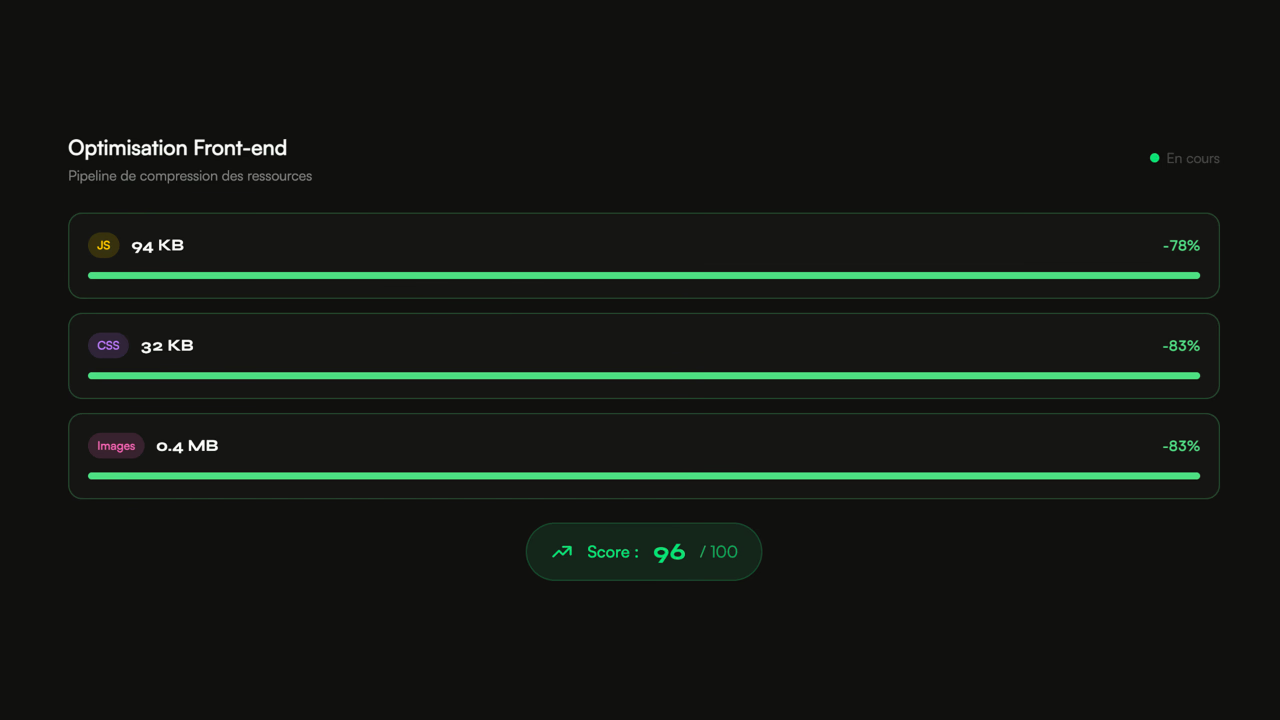
The front-end web performance consultant plays a crucial role in creating and optimizing websites. They are responsible for designing, developing, and enhancing user interfaces, ensuring that they are intuitive, attractive, and high-performing. Consequently, their work primarily involves analyzing user requirements, designing suitable user interface solutions, and optimizing site performance to provide a seamless user experience.
In addition to the technical work related to code, the front-end web performance consultant also takes on a number of other responsibilities. They often need to collaborate with other members of the web development team, such as UX/UI designers and back-end developers, to ensure a smooth integration between the site's design and its back-end functionality. Furthermore, they must constantly monitor current trends and best practices in their field to integrate this knowledge into their optimization strategies. The work of the front-end web performance consultant has a significant impact on the overall functioning of a website. Indeed, the visual quality of the website as well as its ease of use largely depend on the technical and creative skills of the front-end consultant. The latter not only helps attract more visitors through appealing design but also retains those visitors on the site through the proper technical functioning that facilitates their navigation. Improving Front-end Web Performance: Techniques and Methods --------------------------------------------------------------- To enhance front-end web performance, the web performance consultant employs a variety of techniques and methods. One of the key strategies is code optimization. This can include minification and compression of CSS, JavaScript, and HTML files to reduce their size, which speeds up the site's loading time. The consultant can also improve performance by optimizing images, using modern formats like WebP or AVIF that offer better quality at a smaller file size. Another commonly used technique is lazy-loading. This method involves loading only the necessary elements when they are needed, rather than all elements at once. Instead of loading all images on a page as soon as it opens for the user, only those visible on the screen are loaded. The others will be loaded as the user scrolls down the page, just before they are about to be displayed. Finally, a front-end web performance consultant focuses on enhancing the user experience. A quick response time is essential to maintain visitors' interest on a website. Using an effective system to manage client-side caching can significantly speed up page loading during repeat visits. Similarly, ensuring optimal compatibility with various browsers and devices also contributes to providing an improved user experience.
Ready to boost your performance?
Data 2023-2025