- LCP
Optimize Largest Contentful Paint in 2026
Improve the Largest Contentful Paint with image optimization tips, critical CSS and JS, and effective server strategies.
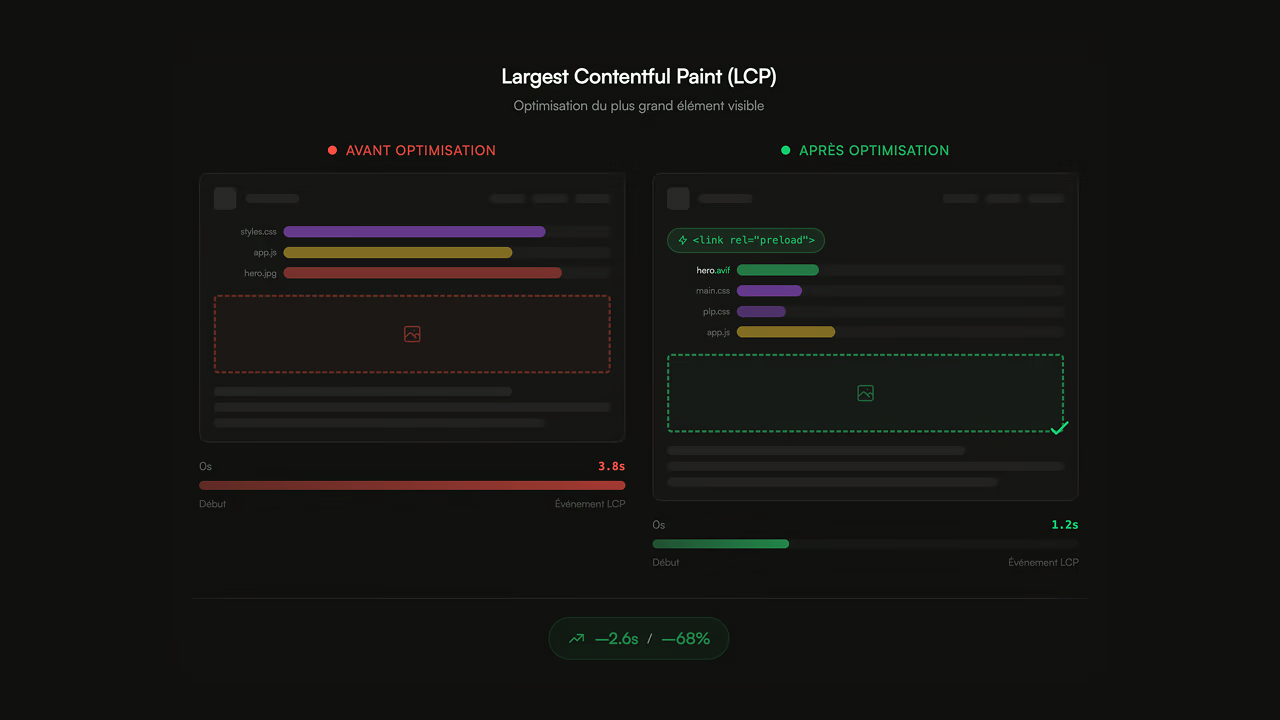
Largest Contentful Paint (LCP)
Optimization of the largest visible element

Paul Delcloy
Author
Understanding the Largest Contentful Paint
The Largest Contentful Paint (LCP) is a key metric of Google's Core Web Vitals. It measures the time it takes for a user to see the largest visible element on the screen. Google recommends that the LCP be under 2.5 seconds to provide an optimal user experience.
Basics of Image Optimization
Optimizing images remains a simple yet powerful lever. In 2026, many sites continue to load oversized or uncompressed images. It's a basic, almost childish problem. Use modern formats like AVIF or WebP, compress your images, and adjust the size with HTML attributes like srcset to serve the most suitable version for each screen.
<img src="image.jpg" srcset="image-480w.jpg 480w, image-800w.jpg 800w" sizes="(max-width: 600px) 480px, 800px">
Scripts and Styles: async, defer, and beyond
The async and defer attributes for scripts are must-haves. They allow deferring the loading of non-critical scripts, preventing the page rendering from being blocked. For CSS, focus on tree-shaking: extract and load only the critical CSS necessary for the initial render.
<link rel="preload" href="styles.css" as="style">
<script src="script.js" defer></script>
💡 Tree-shaking reduces the size of JS and CSS files by eliminating unused code, essential for fast rendering.
Advanced and Custom Optimizations
In 2026, advanced optimizations become the norm for those who truly want to perform. Use fetchpriority to prioritize loading critical resources, preload to indicate to the browser which critical resources are needed very early to load the page.
<link rel="preload" href="large-image.avif" as="image" fetchpriority="high">
These techniques require fine expertise to be implemented effectively. A web performance audit conducted by an expert can reveal bottlenecks specific to your site.
TTFB: The Foundation of All Optimization
The Time to First Byte (TTFB) is often overlooked, but as long as the server does not respond, the browser is blocked. Optimizing the TTFB starts with efficient server code and well-thought-out CDN configurations. Server response time optimization thus becomes the priority, alongside optimizing what happens on the client side.
- Well-configured CDN: Deliver content from servers close to the end user.
- Efficient server code: Reduce request processing time.
- Effective caching: Use aggressive caching for static resources.
Diverse Levers for an Optimized LCP
Improving the LCP requires diverse actions, ranging from image optimizations to fine server-side adjustments. Each site is different, and the levers to activate vary depending on the context. A thorough analysis and a tailored action plan remain the best approaches to ensure a performant LCP in 2026.
Published on 06 Apr 2026
Updated on 17 Apr 2026