Core Web Vitals: Google Update on March 12, 2024
INP replaces FID as a Core Web Vital. How to prepare for this update and optimize your site's interactivity.
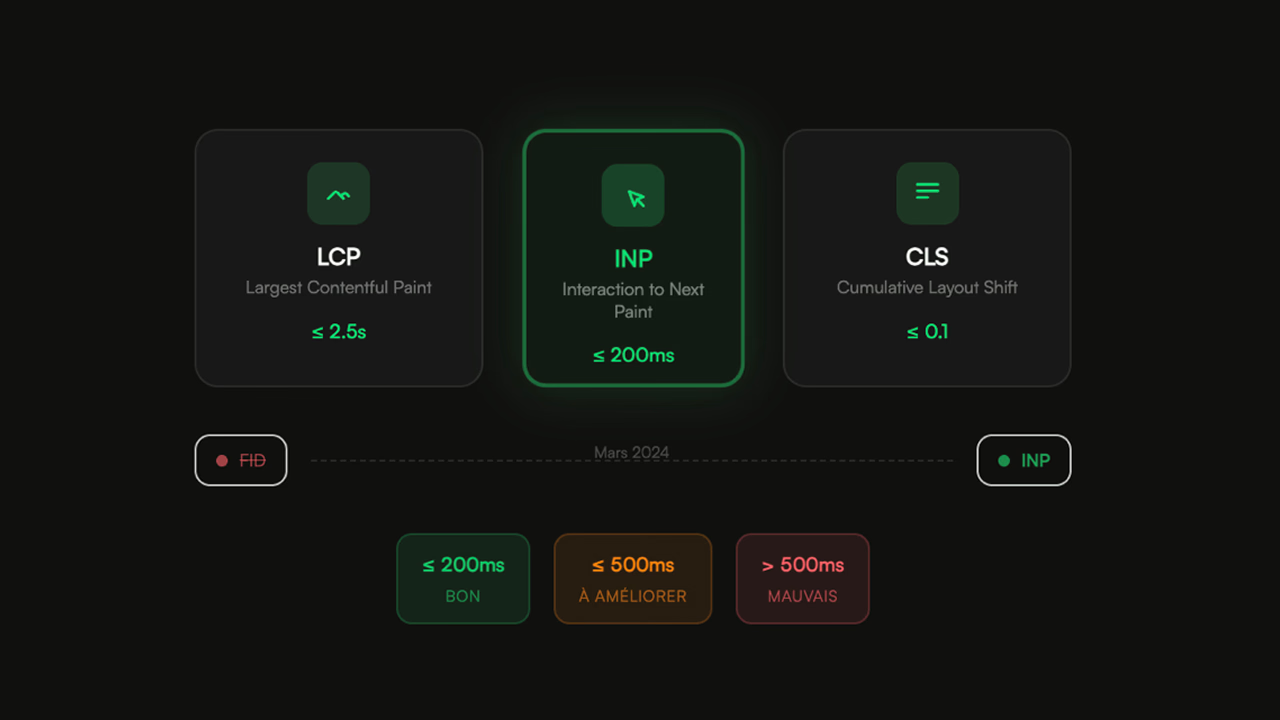
LCP
Largest Contentful Paint
≤ 2.5s
FID
First Input Delay
Deprecated
INP
Interaction to Next Paint
≤ 200ms
CLS
Cumulative Layout Shift
≤ 0.1
≤ 200ms
Good
≤ 500ms
Needs work
> 500ms
Poor
Interaction to Next Paint (INP) Replaces First Input Delay as a Core Web Vital
In mid-February 2024, Google made an important announcement regarding interactivity metrics on the web. The online search giant declared that it would replace the current metric, "First Input Delay" (FID), with a new metric called "Interaction to Next Paint" (INP). This change was scheduled to take effect on March 12, 2024.
The First Input Delay is currently used to measure the responsiveness of a web page. It calculates the time between a user's action (such as a click or keystroke) and the browser's response to that action. However, Google believes this measurement does not always accurately represent the real user experience. This is why it is introducing the new Interaction to Next Paint metric.
Interaction to Next Paint, unlike FID, takes into account not only how quickly a page responds to an initial user interaction, but also how long it takes for the resulting visual changes to be rendered on screen. By placing greater emphasis on this latter aspect, Google hopes to give developers a more precise and comprehensive way to evaluate and improve the interactive performance of web pages.
Preparing for Google's Core Web Vitals Update
With Google's recent announcement about replacing "First Input Delay" with "Interaction to Next Paint", it is essential for web developers to understand how to prepare for this Core Web Vitals update. The first step is to determine your current INP. This can be done via Google's Search Console or by using the PageSpeed Insights tool.
Search Console provides a web performance report that includes statistics on First Input Delay. The transition to the new metric is not yet in effect, but it is likely that Google will update this tool to reflect the change. For its part, PageSpeed Insights also provides an FID measurement and will undoubtedly be updated to include INP.
Once you have a clear picture of your current interactivity performance, you can start working on the necessary improvements. To improve your INP, several strategies can be adopted:
- JavaScript optimization: this may involve minifying JS code, deferring or removing non-essential scripts.
- Optimizing DOM size and depth: a smaller, shallower DOM can significantly improve interactive performance.
- Simplifying CSS selectors: avoiding complex CSS selectors can help reduce the time needed to render visual changes after a user interaction.
Always keep in mind that this is an ongoing process. Web performance standards are constantly evolving, and it is essential to stay informed about the latest updates and best practices. The ultimate goal is to provide the best possible experience for your users, which will translate into better rankings in Google's search results.
A Web Performance Consultant or Agency to the Rescue
Faced with the complexity of the changes announced by Google, many businesses may feel the need to call on a web performance expert. A web performance consultant or a specialized agency can provide invaluable help in navigating these sometimes murky waters and optimizing your site accordingly.
These experts have an in-depth knowledge of web performance metrics, including Core Web Vitals, and are up to date with the latest Google announcements. They can offer strategic advice on the best way to improve INP, as well as other key aspects of web performance. By calling on a web performance consultant or agency, you can ensure that your site is optimized to deliver the best possible user experience and rank more favorably in search results.